Thirty day challenge – week 3

Summary

I am starting to feel like a routine is forming, perhaps not around diet yet, but definitely in regards to training. In previous years of doing this I was eating clean most days, as it provided improved diabetic control in the absence of an APS/AID and pump.

This week was particularly heavy due to my birthday dinner, a new phone, a new version of AAPS (Boost test platform 3.6.5) and a 25 km cycle. *I have been unable to pair my galaxy watch with my new phone, which is sad as I really liked the watch and having the plethora of sensors.

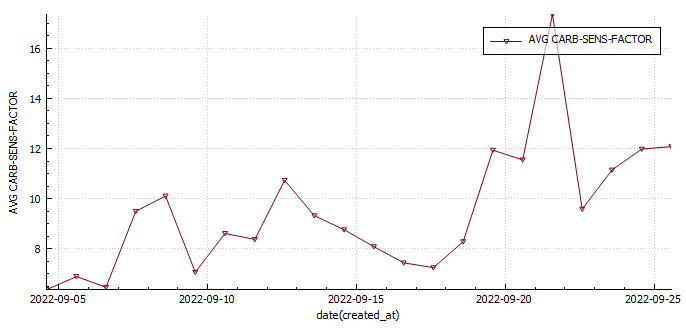
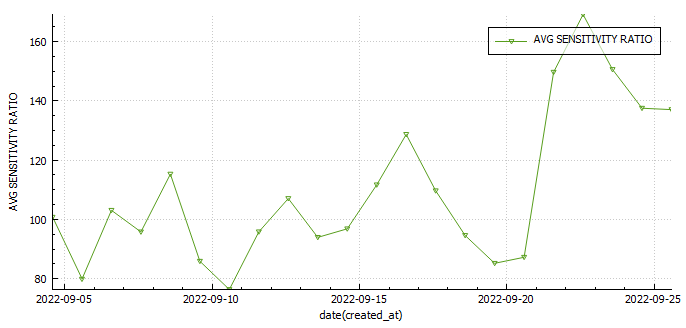
I was investigating the possibility of measuring insulin sensitivity changes in AAPS . One way would be to use the autosens feature in AAPS , but since I wasn’t including the carbs I ate to fix hypos, and I was snacking in-between to keep my readings steady that wasn’t going to work. The only metric that may prove useful may be my carb sensitivity factor (CSF). The average CSF over the 22 days so far is 8.7 while the average sensitivity ratio was 106%. This would mean that according to CSF I was 36% more sensitive to carbs yesterday or 29% less sensitive according to autosens.
Body Metrics

StartWeek 1Week 2Week 3Week 4
Weight (kilograms)75.8747574.1
Body fat percentage (according to Samsung)17.3%17.8*
Body fat percentage (according to the navy seal calculator)15%15%14.8%
Total volume
Table stating the weekly body metrics I am tracking.

Exercise

Week 1Week 2Week 3Week 4
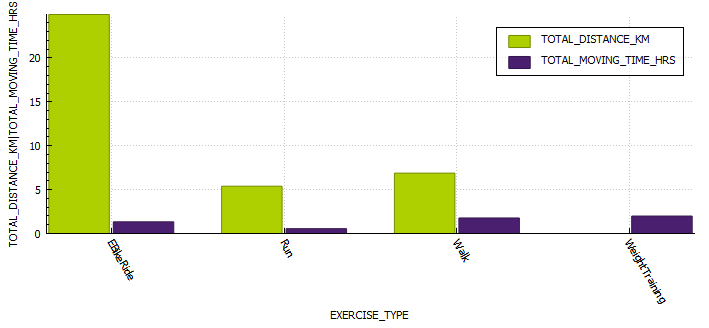
Distance (kilometres)25.1720.5437.22
Activity (hours)4.343.655.64
Table stating the weekly exercise metrics I am tracking

Nutrition

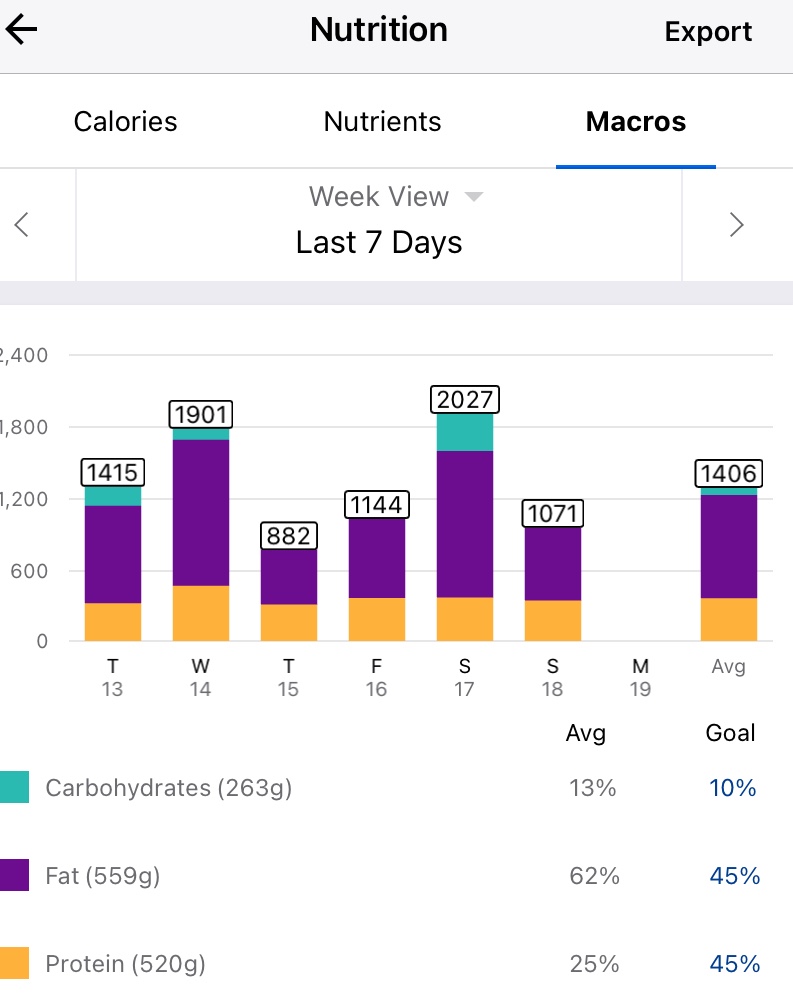
Screenshot of average macro-nutrients consumed during week 3

Diabetes

Week 1Week 2Week 3Week 4
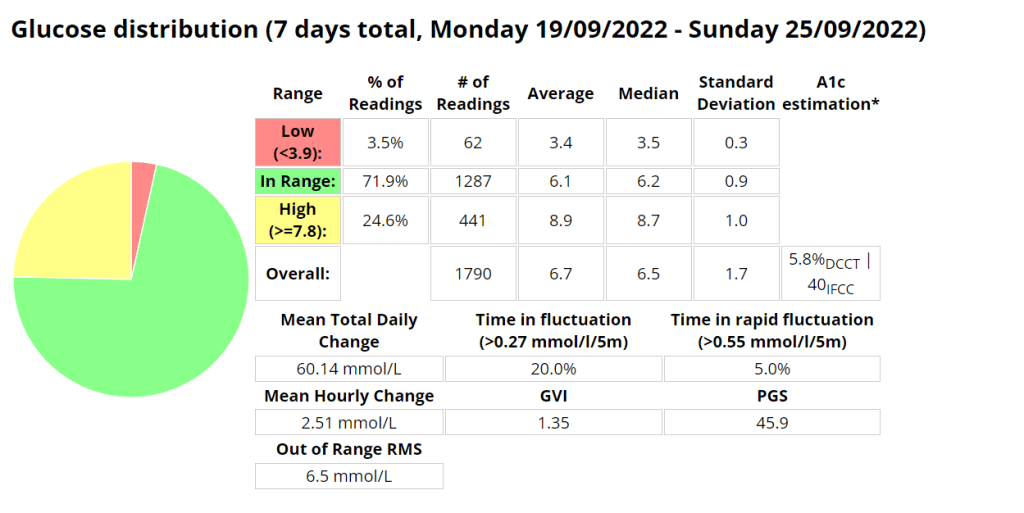
Low (<3.9) (%)0.90.63.5
In Range (3.9-7.8) (%)75.374.771.9
High (>= 7.8) (%)23.824.724.6
Standard deviation (SD) 1.31.71.7
Average (mmol/l)6.87.0 6.7
A1c estimation (%)5.96.05.8
Table stating the weekly diabetic metrics I am tracking.

Ideally I want to see a time-in-range (TIR – 3.9-7.8 mmol/l) exceeding 90% with an average in the low sixes and a standard deviation (SD) around one (1).
Thirty day challenge – week 2

Summary

The second week I have gained a little weight (surprise its not muscle) and had a reduction in exercise hours, which was mostly due to a very long ride I had the previous week.

My diabetic metrics have declined and I feel like all of this mostly due to my diet which needs tweaking.

Body Metrics

StartWeek 1Week 2Week 3Week 4
Weight (kilograms)75.87475
Body fat percentage (according to Samsung)17.3%17.8
Body fat percentage (according to the navy seal calculator)15%15%
Total volume
Table stating the weekly body metrics I am tracking.

Exercise

Week 1Week 2Week 3Week 4
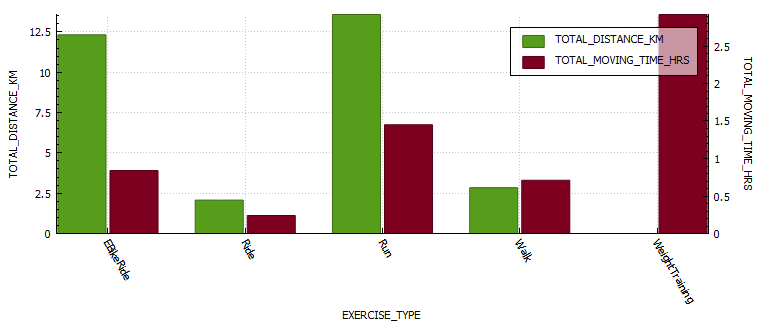
Distance (kilometres)25.1720.54
Activity (hours)4.343.65
Table stating the weekly exercise metrics I am tracking

Nutrition

Screenshot of average macronutrient consumed during week 2

Diabetes

Week 1Week 2Week 3Week 4
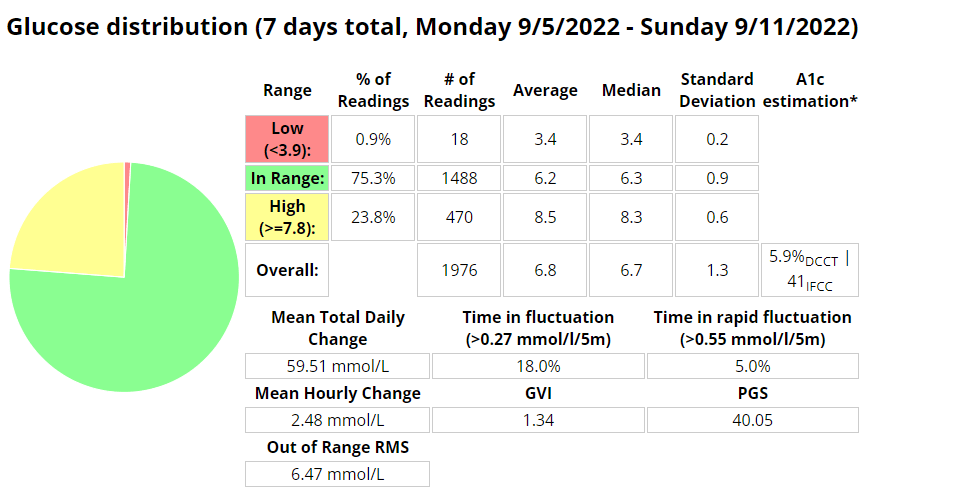
Low (<3.9)0.9%0.6%
In Range (3.9-7.8)75.3%74.7%
High (>= 7.8)23.8%24.7%
Standard deviation (SD)1.31.7
Average 6.87.0
A1c estimation5.9%6.0%
Table stating the weekly diabetic metrics I am tracking.

Ideally I want to see a time-in-range (TIR – 3.9-7.8 mmol/l) exceeding 90% with an average in the low sixes and a standard deviation (SD) around one (1).

Thirty day challenge – Week 1

Summary

The first week was challenging to say the least. As I have increased my physical activity my insulin needs seem to have fundamentally changed, and this resulted in quite a few lows. I also had some tech issues, my Android phone had an operating system error and my Dexcom sensor wasn’t enjoying the resistance training I was doing as it was inserted in my arm. I reached my activity goals but exceeded my diabetic and nutritional goals.

Body Metrics

StartWeek 1Week 2Week 3Week 4
Weight (kilograms)75.874
Body fat percentage (according to Samsung)17.3%
Body fat percentage (according to the navy seal calculator)15%
Total volume
Table stating the weekly body metrics I am tracking.

Exercise

Week 1Week 2Week 3Week 4
Distance (kilometres)25.17
Activity (hours)6.24
Table stating the weekly exercise metrics I am tracking
Week 1 breakdown

Nutrition

Screenshot of the average and total macronutrients consumed during week 1.
Screenshot of average macronutrient consumed during week 1

Diabetes

Ideally I want to see a time-in-range (TIR – 3.9-7.8 mmol/l) exceeding 90% with an average in the low sixes and a standard deviation (SD) around one (1).

Thirty day challenge

It’s spring, and after a brief ‘almost two months’ of going off the reservation snacking at all times of day and barely exercising, I decided to check my weight. I discovered I had picked up a few kilograms since my last weigh in. After learning this, I decided that it was time for me to get my life back together and start another 30 day challenge. I find these great to provide the reason to get back into a routine.

I know that setting unrealistic goals (like losing 5kgs) isn’t going to work, so I’m going to break down my plan in to nutrition, exercise and diabetes goals.

Exercise

My plan for the month is to gym three days a week, run a minimum of 2 times per week and to mountain bike at least once a week. (So I guess I lied about setting unrealistic goals 🙂 )

Nutrition

For my meals I plan to stick to my usual low-ish carbohydrate meals during the week and try to only go coo-coo bananas on the late night snacking over the weekend. I’ll start carb-counting again as this will almost always yield the best results. This will be supplemented with 2-3 liters of water, depending on length of cardio that day.

Diabetes

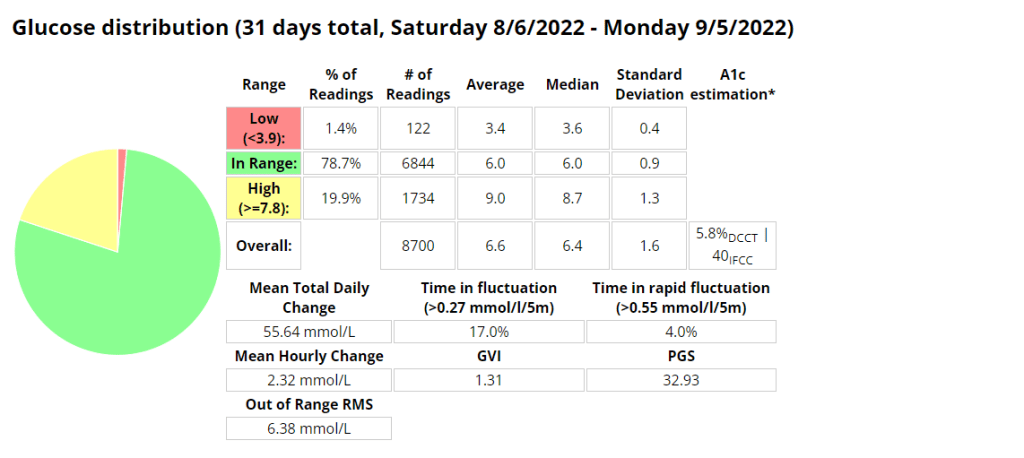
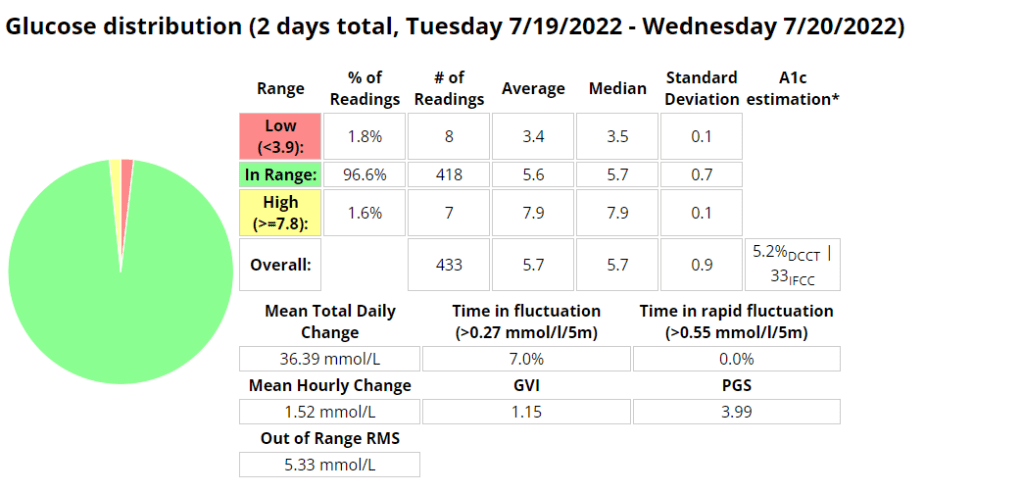
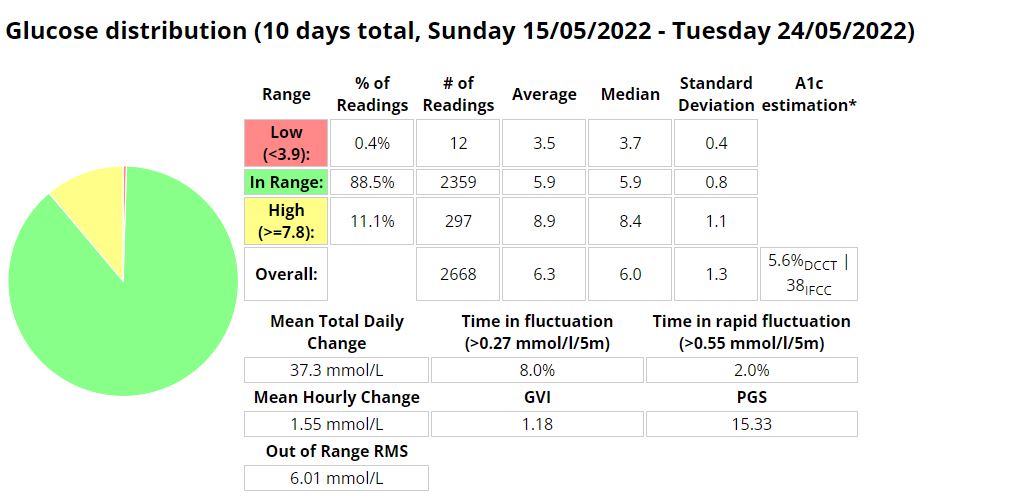
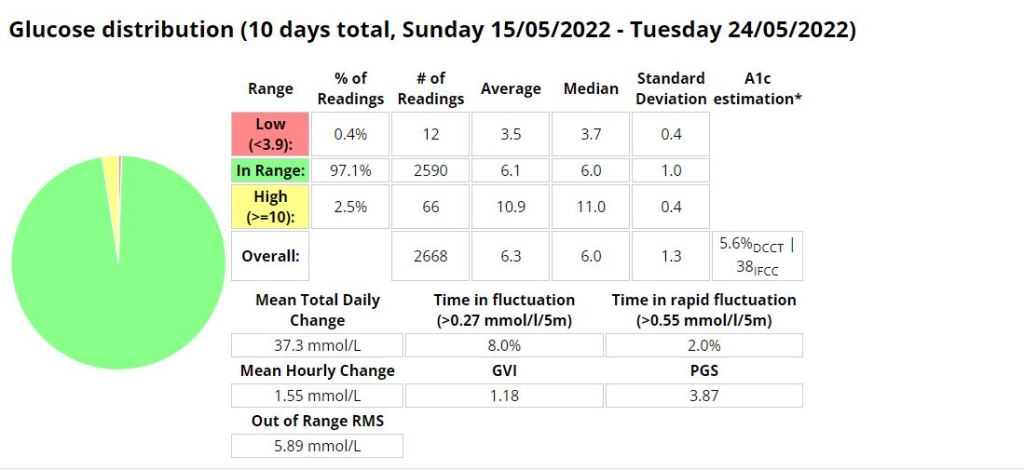
Above is a chart of my starting metrics. Lets see how quickly I can improve those values. Its going to be a little bit of an unfair test as I was not carb-counting during the above period.

We want to see the In range (Time-in-range) increase and the standard deviation decrease. By doing that the average and the A1c should follow. This will mostly be achieved by the diet component of the plan. The exercise component will allow me to eat more cabs and require less insulin, as well as improve circulation, sleep, blood pressure, mood, cholesterol, memory and overall mental and physical health.

I will check in with weekly updates to ensure I keep motivated and accountable.

Video overlay description

I have been working on a repeatable process to create YouTube videos that contain my AndroidAPS (AAPS) device data stored in Nightscout. My first attempt used a Python script to export a CSV file. This needed to be started by saving a note in Nightscout, which I often forgot to do just before I started riding. My most recent update stores the devicestatus (https://your-nightscout-site/api/v1/devicestatus) API call into a database and does not require any external trigger to start the logging process. This data is updated every five (5) minutes as a calculation cycle completes in AAPS. The below is an explanation of some of the fields I am exporting.

Description of values present in the video:

  • IOB (Insulin-on-board) – The amount of active rapid-acting insulin you have in your body.
  • COB (Carbs-on-board) – The estimated number of grams of carbohydrates in your system that are waiting to be absorbed into your bloodstream
  • Basal – The primary job of basal insulin is to keep your blood glucose levels stable during periods of fasting, such as while you’re sleeping
  • Uploader battery – The battery % of the uploader device.
  • BGI (blood sugar impact) – The algorithm uses BGI (blood glucose impact) to determine when carbs are absorbed.
  • Insulin Required – The amount of insulin the algorithm calculates you require to return to a euglycemic state.
  • Finger prick BG – The blood sugar reading from a standard finger prick test.
  • Blood sugar – The CGM blood sugar value.
  • CSF (carb-sensitivity-factor) – The carb rise ratio (by some also called CSF, carb sensitivity factor) describes by how many mg/dl our glucose rises per gram of absorbed carbohydrate.
  • Dynamic ISF (insulin-sensitivity-factor) – An insulin sensitivity factor (ISF) or correction factor describes how much one unit of rapid or regular insulin will lower blood glucose. Dynamic ISF is calculated based on your total daily dose of insulin.

Omnipod Dash – Summary – Week 1&2

Its only been a week and already I feel so comforted by the barely audible click of the pump depressing the plunger in the mini pump at meal times or sporadically throughout the day. Its the sound of blood sugar control. What a week its been learning all I can about Pod changes and being woken up on day 3 by the Pod alarm alerting me its 8 hours before the Pod expires. Once expired it was interesting to note that the Pod functioned as per normal, apparently for another 8 hours.

I had a Pod on days 3 and 4 that was inserted into my leg that may have had a cannula issue, as I struggled to maintain my standard level of control.

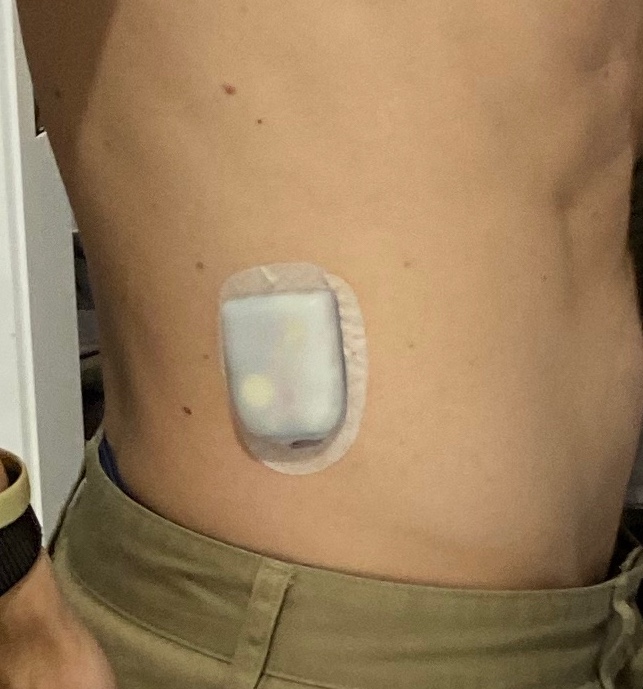
Its been a lot easier to exercise focusing on enjoying the task rather than if I would break the pump or rip out a cannula. Having no wires makes it a lot easier to run or gym as I don’t have to worry about pump placement as much. Previously I needed to ensure I had pants with pockets or a belt clip available.

I have also found sleeping a little easier, as I can barely notice the pump If I roll over onto it.

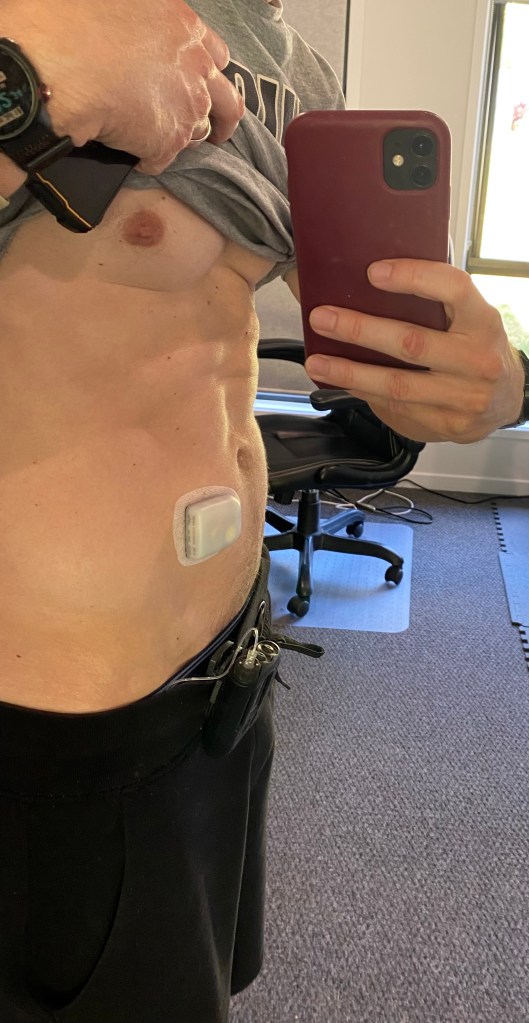
Flank insertion.
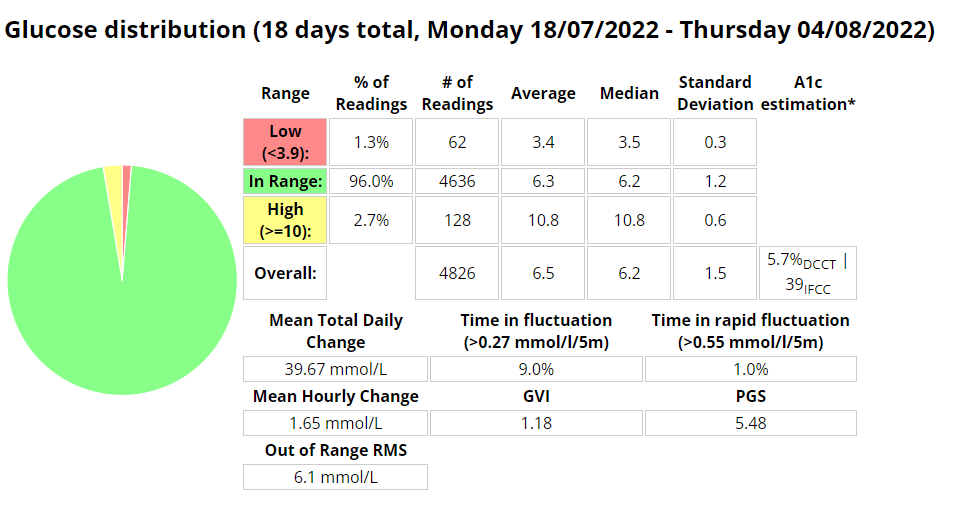
Boost Omnipod – Time in Range (3.9 -7.8 mmol/l)
Boost Omnipod – Time in Range (3.9 – 10 mmol/l)

Unannounced meals

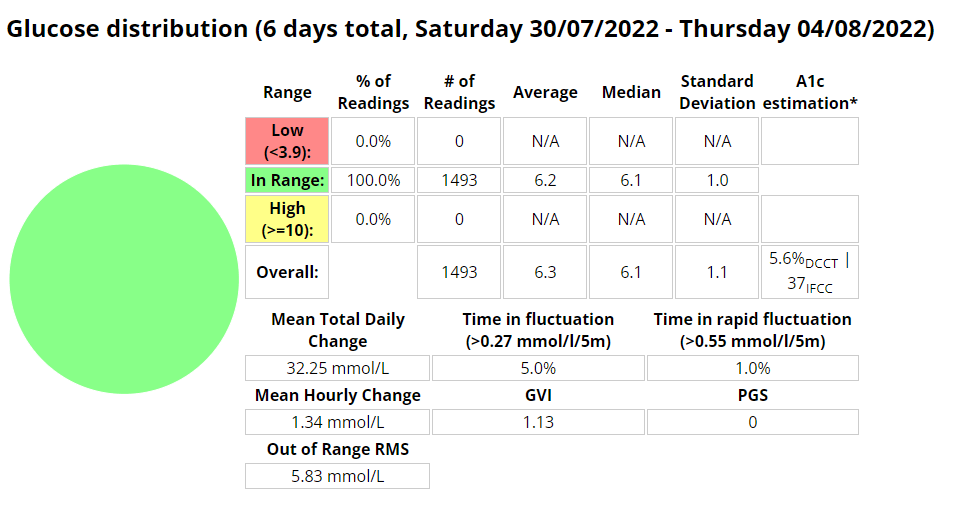
I decided to test the system with unannounced meals consisting of 40g of carbs or less. I am a bit of a control freak when it comes to diabetes so I have been postponing testing this for a long time. The results were outstanding. I will be writing more about this in the future, including any automations I use or test.

Boost Omnipod – UAM – Time in Range (3.9 -7.8 mmol/l)

Boost Omnipod – UAM – Time in Range (3.9 – 10 mmol/l)

Unannounced meals – Week 1

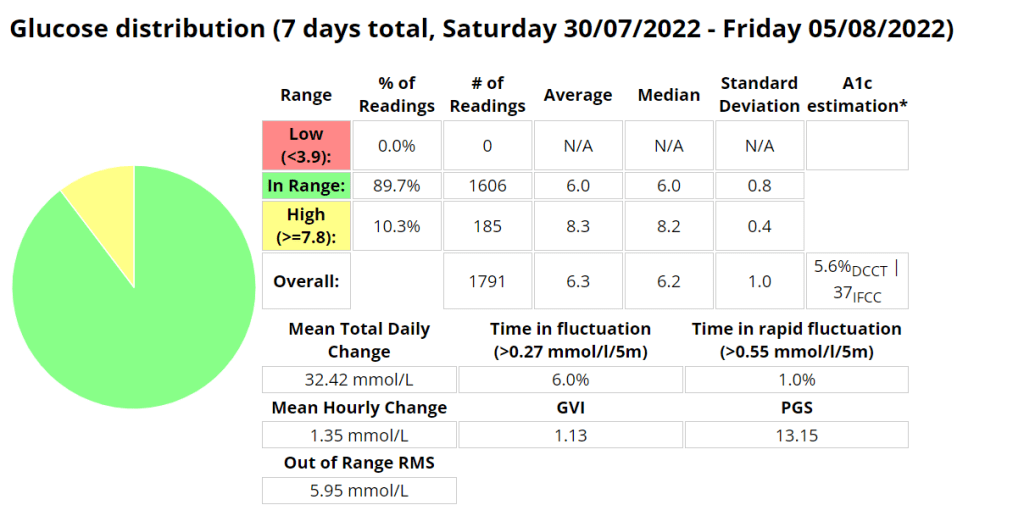
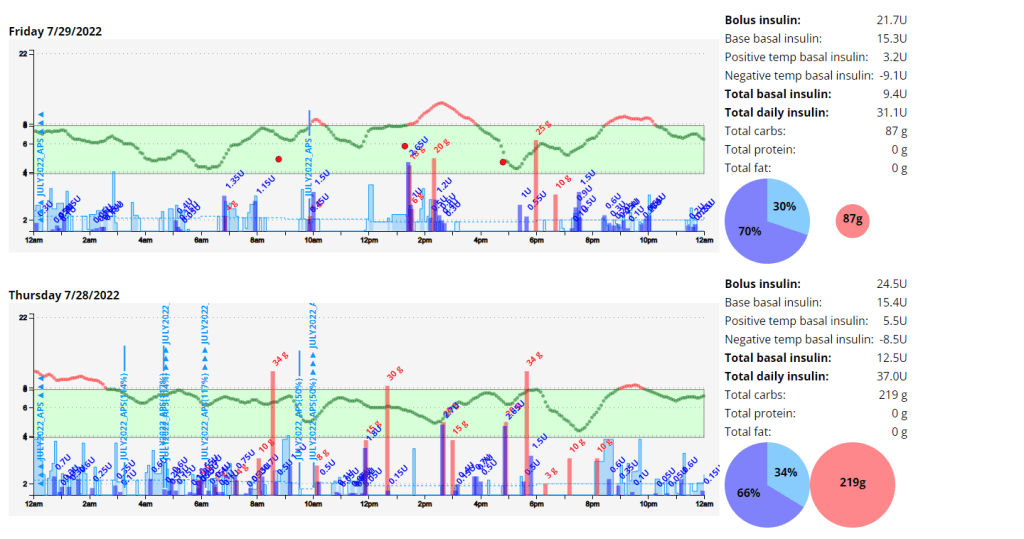
I started testing unannounced meals in Android APS on Saturday 30 July 2022. I am a bit of a control freak and really couldn’t believe that a system could manage my diabetes better than I could. I had more information available to me to make more informative decisions “I would tell myself”. But I seem to be wrong, well at least partly. I am using a branch of AAPS that delivers insulin early, but I found that managing protein and fat was more problematic than carbs seemed to be. Stubborn high blood sugar that seemed to take a few hours to correct. So I decided to do a little testing with automatons to try and improve those numbers.

Boost UAM stats (Time in range 3.9-7.8 mmol/l)
Boost UAM stats (Time in range 3.9-10 mmol/l)

Announcing carbs and pre-bolusing

Eerm…what? How is this possible? It seems with accurate carb counting I still cant account for digestion times as well as AAPS can.

Automations

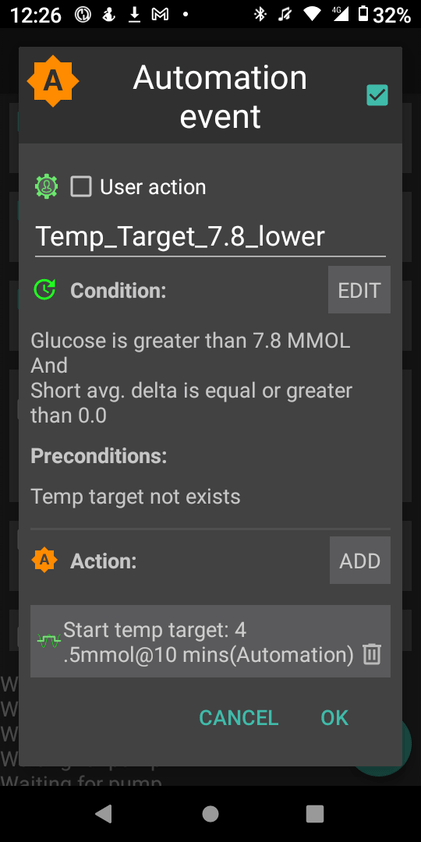
I use two (2) automations to try and manage my readings more closely. These automations are over and above the Boost logic that provides insulin earlier than the standard code.

The first automation simply sets a lower target when my reading is above 7.8 mmol/l AND not dropping. This allows AAPS to bring down my readings more quickly.

The second is to try and compensate for protein and fat in the low carb meals I eat. This automation will activate if

  • my reading is above 6.5 mmol/l AND
  • between meal times AND
  • my reading isn’t dropping AND
  • there is active resistance detected (not sure if this even matters)

My hypothesis is that the system can detect the resistance post the meal window but I need to test this assertion further.

Omnipod Dash

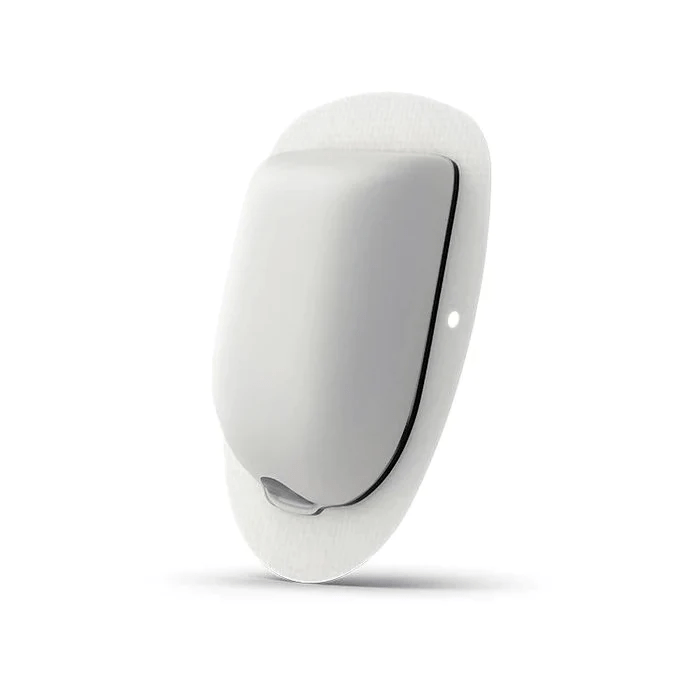
I decided to purchase the Omnipod Dash trial pack of 10 pods for $30 AUD to see what all the hype was about. It turns out the hype is warranted, as this is an incredible little system. I’m very excited to use the device under a multitude of conditions and I hope that my experience can be informative. My main testing criteria will be connectivity, recovery in the unlikely event a Pod is damaged, robustness during various activity, water resistance and general day-to-day activity including time with my two year old daughter.

Benefits

The pump system operates much the same as any other pump system available, with the main difference being that the pump and cannula are all part of the same physical unit. This is a huge advantage for sports, but can be noticeable while changing clothes, going to the toilet or during sexy time. The unit is so small its presence is barely noticeable.

Omnipod Dash.

Sugar Management stats (So far)

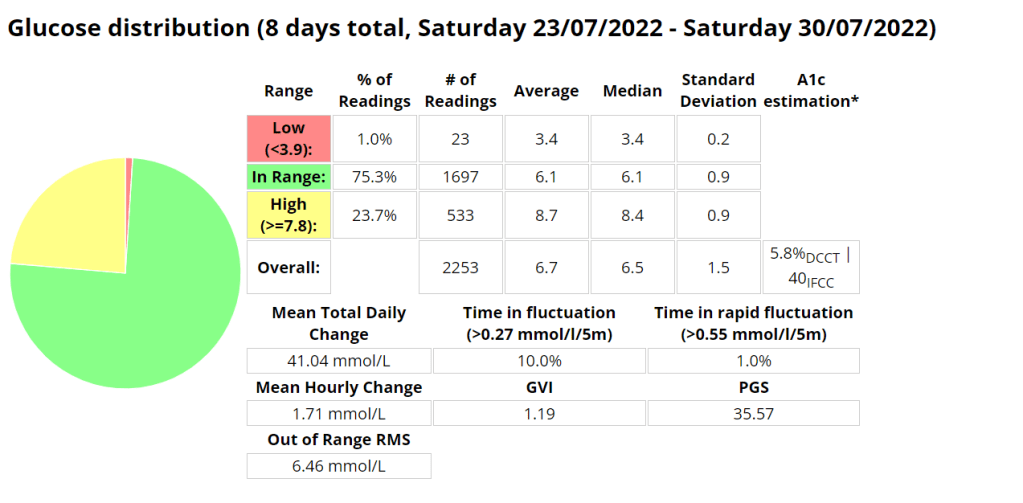
I am very pleased (and surprised to be honest) that I am using 28% less insulin on the Pods with improved (+9.3%) blood sugar control (Time in Range 3.9-7.8 mmol/l). I noticed far fewer super micro boluses (SMBs) being administered than before, but maybe that is due to me letting AAPS do more of the work in managing my sugars through unannounced meals (UAM).
Management Stats from Nightscout for the duration of the experiment so far. TIR = 3.9-7.8 mmol/l
Total daily dose (TDD) and carbs average for the duration of the experiment.

Note: I am not adding in all the carbs I am eating as I am using announced meals in AAPS.

The Ambulatory Glucose Profile (AGP) enables retrospective analysis of dense data, trends and
patterns for the duration of the experiment.
Management Stats from Nightscout for the week prior to the experiment so far. TIR = 3.9-7.8 mmol/l
Total daily dose (TDD) and carbs average for the week prior to the experiment.
The Ambulatory Glucose Profile (AGP) enables retrospective analysis of dense data, trends and
patterns for the week prior to the experiment.
Management Stats from Nightscout for the duration of the experiment so far. TIR = 3.9-10 mmol/l
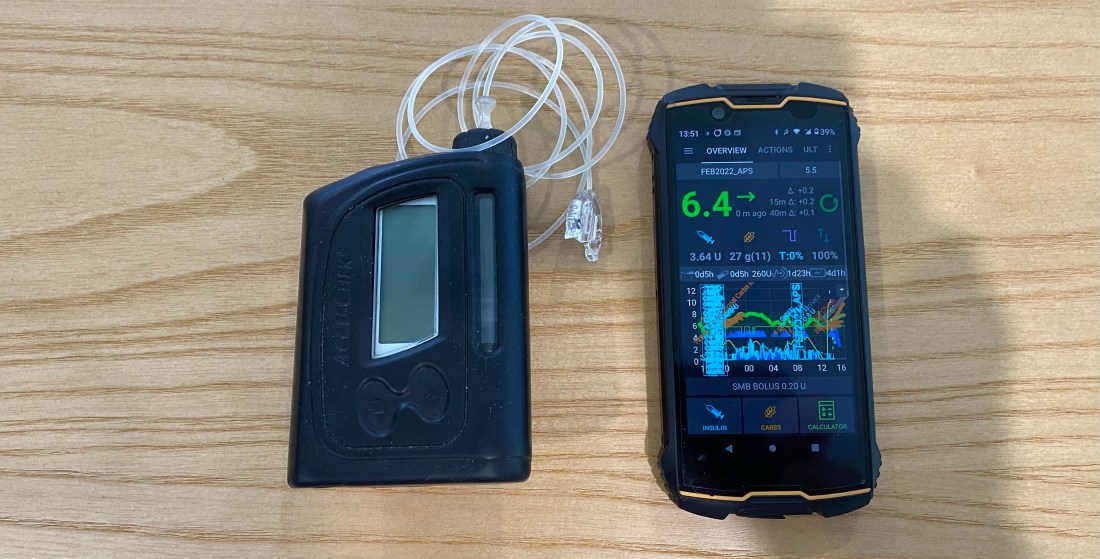
Screenshot from AAPS highlighting the SMB’s.

Android APS Setup

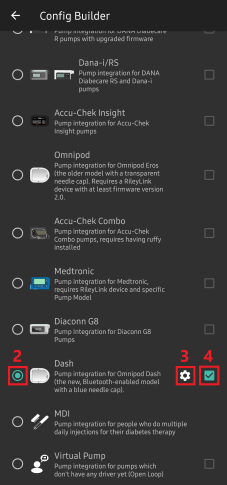
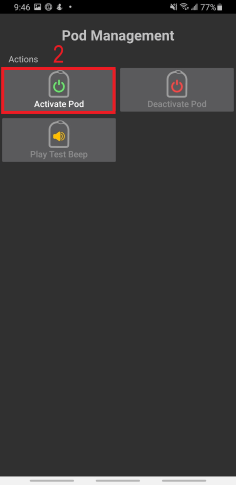
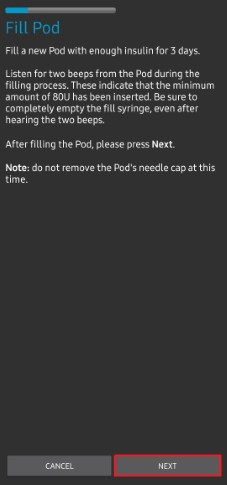
Setup of the Pod system in Android APS (AAPS) Boost Master 3.6.4 was surprisingly easy and intuitive. I just followed the Prompts after going to the configuration builder and selecting Dash as the pump.Its a very similar process for Eros pods, with the added requirement to pair the OrangeLink / RileyLink device.

Setup Instructions

Installed Pod

Installed Pod
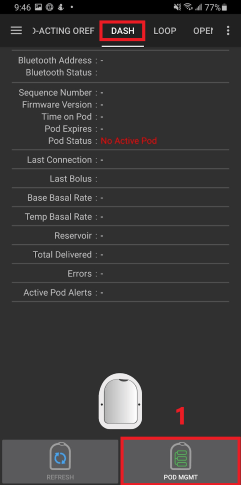
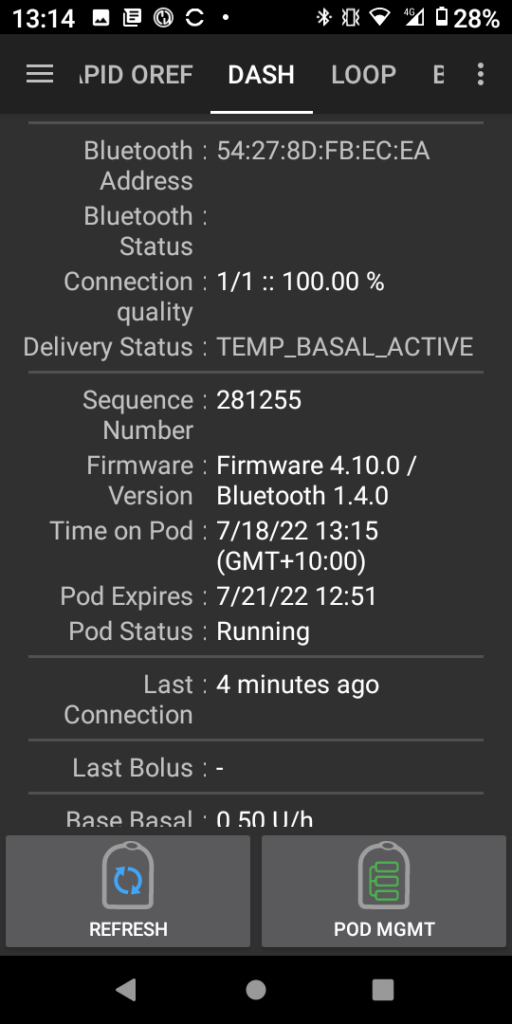
Dash page within AAPS
Dash page within AAPS.

Errors

I had an error starting the pod, but after hitting retry multiple times the pod activated and all was working as expected

Exercise

Exercise has been a lot more enjoyable without all the wires and having to worry about pump placement or damage. If I mountain bike and fall off (which happens every now and again) I lose one pod, and not an entire pump. Having more pocket space and less to carry is an added benefit.

Whats next?

I plan to test the pod while resistance training, mountain biking, running and the most intense sport I play, wrangling my two year old. If she cant destroy them, they are indestructible 🙂

Android APS – Adjusting Boost after testing AIMI

An interesting set of results from my time with Boost. I cant wait to return to AIMI with what I have learned.

I was eating slightly less carbs (118g vs. 136g) than when I was using AIMI, but I would expect that if your profile is setup correctly that the amount of carbs shouldn’t have much of an impact on performance metrics. I was running into a few hypos so I lowered the algorithms insulin required percentage (70% vs. 100%) which resulted in a whopping 1.6% decrease (57 minutes vs. (288 minutes / 4.8 hours)) of time spent in a hypoglycaemic state while using Boost.

My standard deviation was slightly lower (1.3 vs. 1.4) signifying less fluctuations between readings while my time in a hyperglycaemic state went up 0.6% (25.2 hours vs. 26.6 hours)).

I did have to turn off “enable boost percentage scale” as this was providing too much insulin, but more experimenting could remedy this.

Another interesting observation was that my ratio between total daily dose (TDD) and total carbs eaten went down from 4.2 to 4.01 (grams of carbs per unit of insulin) as my average blood sugar lowered.

My exercise seems to have stayed pretty consistent during testing (as per the table below) which leads me to believe the reduced insulin need may be related to requiring less insulin when blood sugar is euglycemic. Its going to be a little more difficult to track that for the next few weeks as I am preparing to ramp up training for the Southern Cross 10km in July. The training has however provided an opportunity to fine tune my running routine as outlined here in my post about predicting blood sugars while running.

I cant wait to do some further testing with AIMI, Boost and Eating now.

Table of performance metrics from when I was MDI to the latest build of Boost.
Boost Stats (70% insulin required)
AIMI Stats (100% insulin required)
Boost TIR stats 3.9 – 10mmol/l
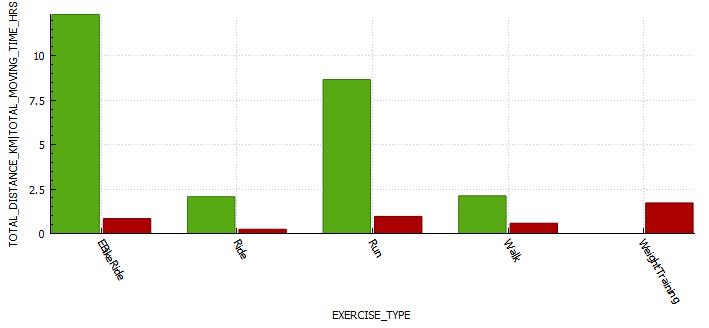
Exercise table (stats derived from Strava and Python scripts)

Predicting blood sugars while exercising.

I recently posted about how my experimenting with running using AAPS was progressing. I observed that under certain conditions there was a significant lag between the capillary blood and CGM readings at about the 30 minute mark. This sparked some interest in wanting to know if I could predict what my capillary blood sugar could be using machine learning. I’m still not sure if its entirely possible yet, but I am having fun trying, and I have learned a lot in the process. I’m currently working on the script that will allow me to overlay a lot more AAPS data during a workout, including predictions.

I am getting a lot better at managing blood sugars as I noticed the last 14 exercises I was in range (3.9-7.8) 100% of the time.

Python script data capture

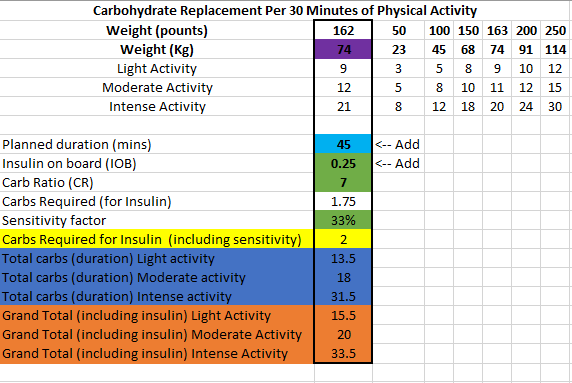
I have changed my approach slightly towards eating before exercise and have piggy backed off some research done by Gary Scheiner to create a spreadsheet that estimates the carbs required and effort for a run.

https://wordpress.com/post/t1daaps.wordpress.com/482