2024 Half Marathon

Featured

08 July 2024

The half marathon has passed. The training this year went well, with no running related injuries to speak of at the point of writing, although I did get food poisoning a week before the race and I missed my last long run. I have learned a lot over the course of the year, which has helped get me to this point. The actual race was a totally different experience, it rained for the first few kilometres, I had stomach cramps and I suffered intense muscles spasms, none of which happened in over a thousand kilometres of my training over the course of the last two (2) years.

Race day 2024 was very different than I expected. I felt confident due to all my training. The rain was an annoyance, but one easily overcome by a running jacket (if I race again I’ll get a opaque poncho).

I woke up at 03:50am with little sleep and a blood glucose of 5.8 mmol/l. This crept up steadily, likely due to cortisol and adrenaline. By race start time I was 9.0 mmol/l with 0.9 units of insulin on board (IOB). Due to the IOB I ate about one third of a Cliff Bar (18g of carbohydrates) which in hind-sight was a mistake.
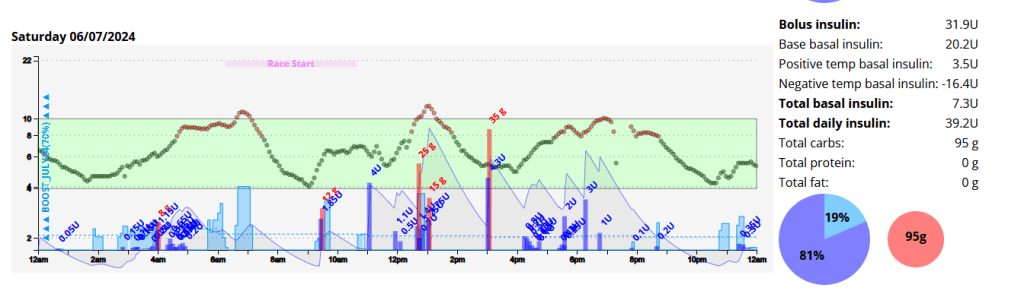
Nightscout graph for the entire day.

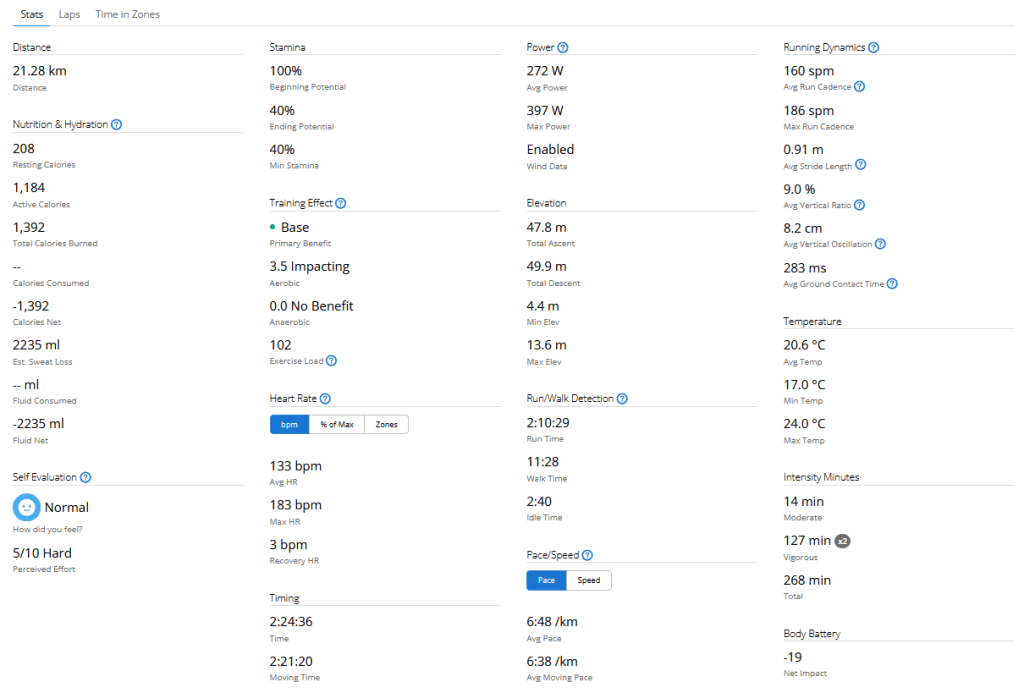
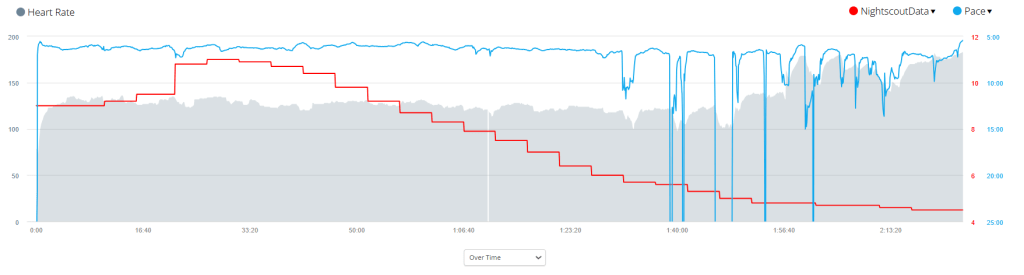
Due to the inclement weather my Garmin didn’t pick up my heart rate on my watch consistency, or perhaps even accurately. I found my Garmin advising I was running at approximately 130 BPM even though I felt I was pushing quite hard. I got a personal best (61 minutes) for the first 10 kilometres.

AAPS graph for race day.
LabelRace DayAverage during Training
Start Time06:23 am
Distance21.2km
Average HR133 BPM
Standard Deviation2.3 mmol/l0.8
Coefficient of the variation31.9%11.3%
Blood Glucose – start9 mmol/l6.5
Blood Glucose – min4.4 mmol/l
Blood Glucose – max11.1 mmol
Blood Glucose – average7.4 mmol/l6.7
Time in Range (3.9-7.8)51%71.9%
Insulin on board0.990.1

Race day compared to training was wildly different, I will need to analyse the data and come up with a better race day strategy.
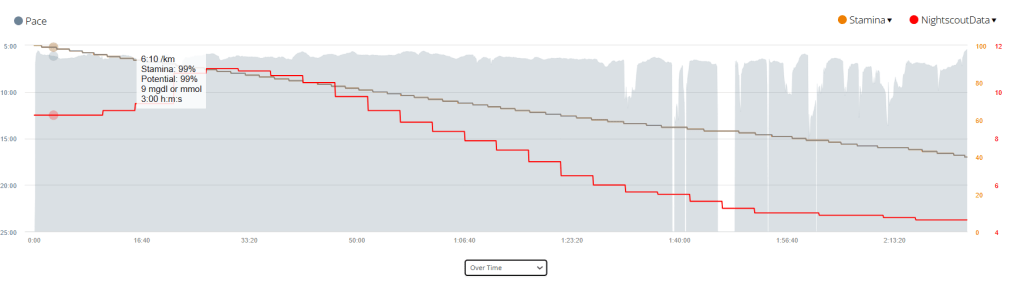
Time vs. Pace with a Stamina and Blood sugar overlay.
Time vs. Heart Rate with a Pace and Blood sugar overlay.
All Garmin Race Stats

I’ll add the link once all data is processed.

I try to come prepared for all possibilities.

This year I spend a lot of time finding the perfect shoe for my unique requirements, namely that I supinate on my right foot due to an atrophied right calf muscle. In my testing, the Brooks Ghost performed the best, allowing me to run any distance with no pain or discomfort.
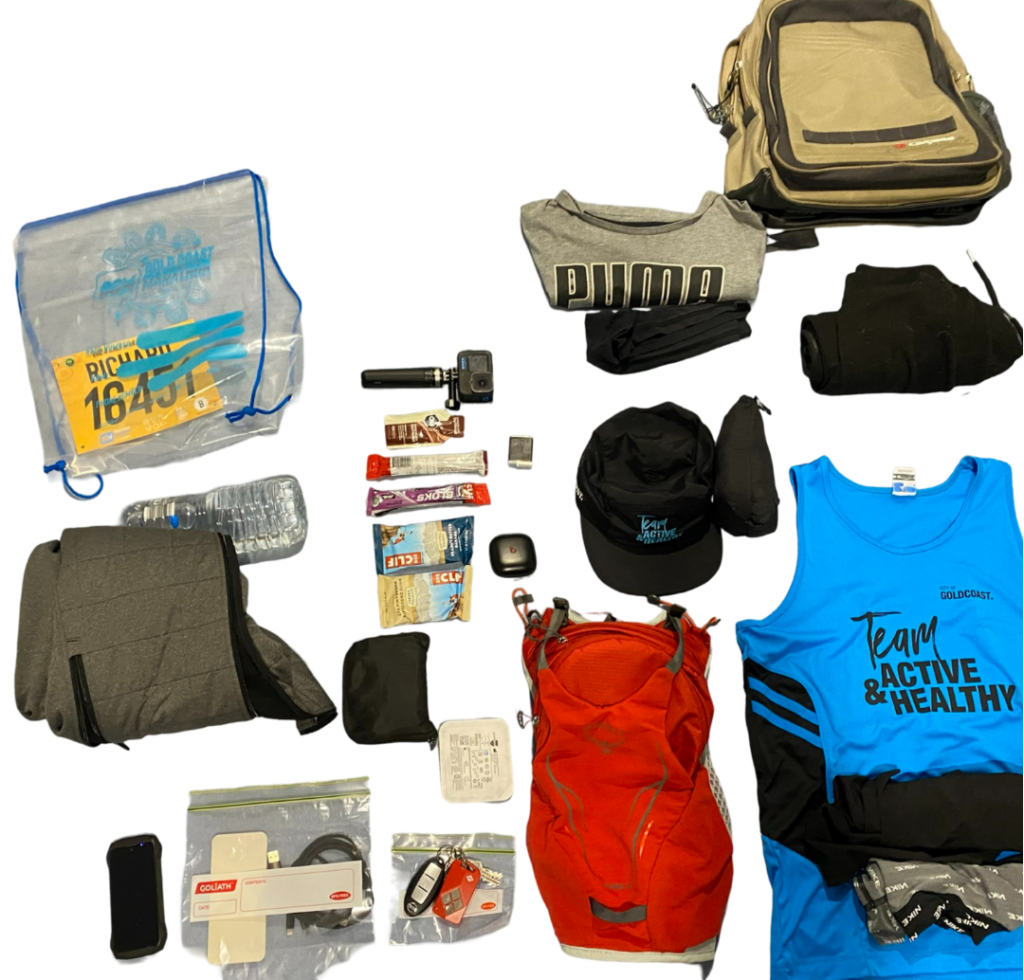
The food poisoning caused an electrolyte balance, which resulted in muscle cramps on race day. This was something I had not experienced during my training, an I was ill prepared for it.

My sugars were higher than during training again, and if I do this again I will refrain from coffee or any carbs prior to the event.

The Essential Vitamins and Minerals for Diabetics: Benefits and Clinical Dosages

Maintaining optimal levels of vitamins and minerals is crucial for overall health, especially for those with diabetes. Nutrient deficiencies can exacerbate symptoms or lead to complications, while proper supplementation can support glucose metabolism, insulin sensitivity, and prevent long-term issues. Here’s a guide to essential vitamins and minerals, their clinical dosages, and benefits for people with diabetes.

1. Vitamin D

  • Clinical Dosage: 600-800 IU per day, but some may require higher doses (up to 2,000 IU daily) depending on deficiency.
  • Benefits: Vitamin D plays a critical role in insulin production and sensitivity. Deficiency is linked with an increased risk of Type 2 diabetes and poor glucose control . Supplementing with Vitamin D helps improve insulin sensitivity, supports bone health, and reduces inflammation.

2. Vitamin K

  • Clinical Dosage: 90 mcg/day for women, 120 mcg/day for men.
  • Benefits: Vitamin K2 helps regulate blood sugar by activating proteins involved in insulin sensitivity. It also improves cardiovascular health, which is crucial for diabetics who are at higher risk of heart disease .

3. Magnesium

  • Clinical Dosage: 310-420 mg/day.
  • Benefits: Magnesium plays a vital role in glucose metabolism and insulin action. Many diabetics are deficient in magnesium, which can lead to insulin resistance. Magnesium supplementation improves blood sugar control, reduces insulin resistance, and may lower the risk of diabetes complications .

4. Zinc

  • Clinical Dosage: 8 mg/day for women, 11 mg/day for men.
  • Benefits: Zinc is crucial for insulin production, storage, and release. Studies show that people with diabetes may have lower zinc levels, and supplementation can help improve insulin sensitivity and enhance blood sugar control . It also supports immune function, making it beneficial for preventing infections, which can be a concern for diabetics.

5. Vitamin B Complex (especially B6 and B12)

  • Clinical Dosage: Daily intake varies based on the specific B vitamin; typically, 1.3-2.4 mcg/day for B6 and B12.
  • Benefits: B vitamins are essential for energy production and nerve health. Vitamin B12, in particular, can help prevent diabetic neuropathy, a common complication. Vitamin B6 may improve glucose tolerance, making it important for maintaining metabolic health .

6. Fish Oil (DHA and EPA)

  • Clinical Dosage: 250-500 mg/day of EPA and DHA combined.
  • Benefits: Fish oil, rich in omega-3 fatty acids (EPA and DHA), has anti-inflammatory properties that benefit cardiovascular health, which is often compromised in diabetics. Omega-3s help reduce triglycerides, improve blood pressure, and enhance insulin sensitivity . They may also help reduce the risk of diabetic complications, such as heart disease.

7. Chromium

  • Clinical Dosage: 200-1,000 mcg/day.
  • Benefits: Chromium plays a key role in carbohydrate metabolism and helps improve insulin sensitivity by enhancing the action of insulin . Supplementation with chromium can lead to better blood sugar control, particularly in those with Type 2 diabetes.

Additional Recommendations for Diabetics

  1. Alpha-Lipoic Acid (ALA): An antioxidant that helps reduce oxidative stress and improve insulin sensitivity. Clinical dosage: 300-600 mg/day.
  2. CoQ10: Supports cardiovascular health and reduces oxidative stress. Diabetics may benefit from 100-200 mg/day.
  3. Probiotics: Gut health can influence insulin sensitivity. Supplementing with a multi-strain probiotic can support glucose control.

Conclusion

A balanced intake of these vitamins and minerals supports optimal metabolic health for diabetics. Always consult with a healthcare provider before starting supplementation, especially if you are managing diabetes, as they can help tailor the right doses for your needs. Maintaining a healthy diet alongside these supplements is key to improving your overall well-being.

My Year with Omnipod: A Bitter-Sweet Journey

My Year with Omnipod: A Bitter-Sweet Journey

It’s been just over a year since I permanently switched to the Omnipod, and my experience has been a blend of highs and lows. Despite a slight increase in my A1C from 5.7% to 6%, in part due to increased carbohydrate consumption, I appreciate the benefits of the Omnipod’s tubeless design. Not having to deal with tubes and the convenience of the Omnipod’s form factor have made managing my diabetes a bit less intrusive.

However, the transition hasn’t been without challenges. The Omnipod system requires immediate activation upon insertion, which can cause insulin resistance due to the initial trauma of insertion. Its design also means that you experience any issues with insulin resistance or site trauma and need to change a pump early, it can be a costly endeavour. This resistance is difficult to manage, especially around meal times when precise insulin delivery is crucial.

Another problem I encountered was tunnelling, where insulin leaks out from the cannula site. This not only affects insulin delivery but can also cause irritation. The excipient nicotinamide in the insulin formulation has also caused some site reactions for me so I mix insulin with a 50-50 ratio with Humalog. Please note this is off label.

Tips and Tricks I’ve Learned

Despite these challenges, I’ve discovered several strategies to improve my experience with the Omnipod:

  1. Adjusting Insulin Profiles:
    • When installing a new pump, I set my profile to 120% to counteract any initial insulin resistance.
    • I try to install the pump a few hours before or after a meal to avoid the insulin resistance coinciding with a meal.
    • If I miscalculate the timing and need to change a pump around meal times, a short 5-10 minute walk on the treadmill helps improve insulin absorption.
  2. Securing the Cannula:
    • Using Opsite Flexifix under the pump has been a game-changer. It keeps the cannula in place and reduces the need to replace the pump after activities like running.
    • For additional security, I use Smith+Nephew Primaflex Plus or Fixomull stretch over the pump. I use an old pump or the over-tape provided by Dexcom as a template to cut pieces as needed.

These tips have significantly improved my experience with the Omnipod, making blood sugar management more consistent and reducing the frequency of pump replacements due to physical activity.

Interesting Facts and Supporting Information

  • A1C and Diabetes Management: An A1C level of 6% is considered good diabetes control. According to the American Diabetes Association, an A1C below 7% is recommended for most adults with diabetes .
  • Insulin Absorption: The angle and method of insulin delivery can impact absorption. Studies have shown that the angle of insertion can affect how well insulin is absorbed, with certain angles potentially causing more issues like tunneling .
  • Use of Adhesives: Using adhesives like Opsite Flexifix can help secure insulin pumps, reducing the risk of dislodgement and improving insulin delivery reliability .

In conclusion, while my journey with the Omnipod has had its ups and downs, the freedom from tubes and the ability to manage my diabetes with less visible technology are significant benefits. With the right strategies, I’ve been able to mitigate some of the challenges and maintain effective blood sugar control.