The below is a list of foods I commonly eat that I decided to analyse. I have listed some lower-carb high protein meals, snacks and a few higher-carb meals. These are all more regular meals so I have had the opportunity to adjust my insulin strategy to better cover the various aspects of the meal.
Equipment/ Software: Dexcom G6, Android APS, Medtronic 522, OrangeLink Pro, Nightscout, Python, Excel

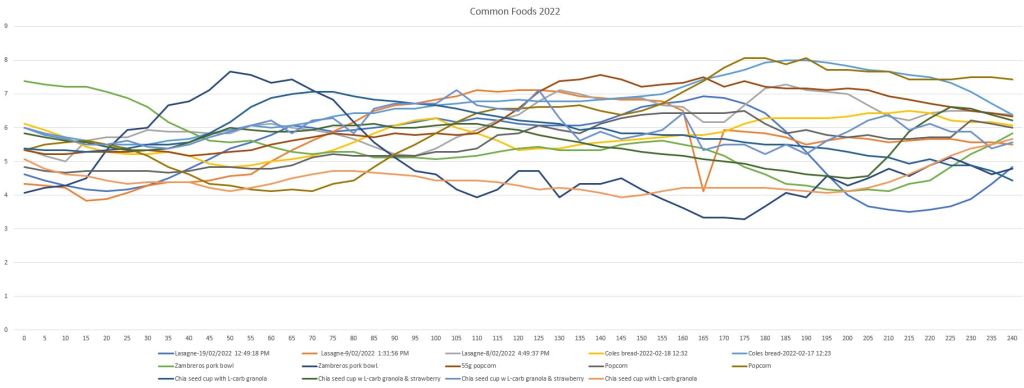
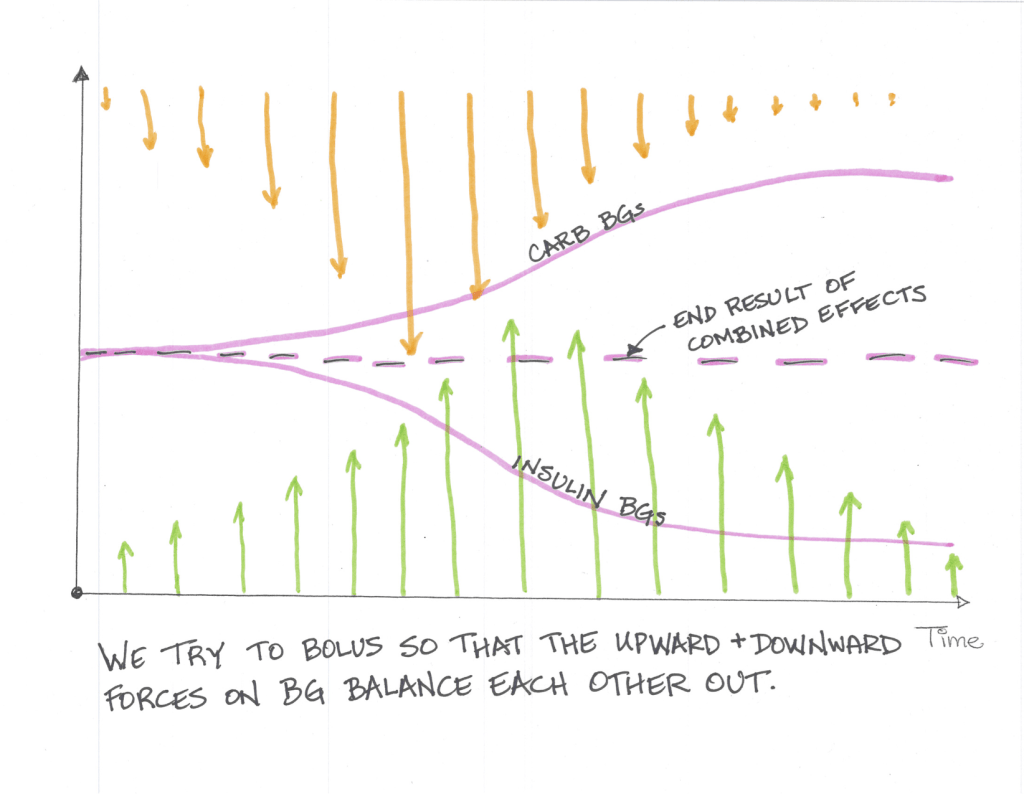
Part of my strategy is to adjust the insulin timing (pre-bolus), starting BG (using temp targets or exercise) and the amounts of insulin used. The amount of insulin used needs to be adjusted based on the macronutrient composition, the amount of fibre and the amount of sugar alcohol in your meal. Sugar alcohols are often not listed on food labels in Australis and those foods should be avoided. Read my post on injecting for protein and fat for a better understanding of how your insulin dose will need to be adjusted to compensate for protein and fat.
To analyse a meal I use three (3) values, standard deviation, time in range (TIR) and Coefficient of the variation. These three (3) values will assist you in determining how good or bad a meal was for you in terms of blood sugar impact (BGI). You can also use the difference between the 3 hour and 5 hour standard deviations to ascertain if you are covering gluconeogenesis correctly.
Time in Range (TIR): For TIR we are looking for a high percentage of your readings within a normal (I use 3.9-7.8 mmol/l ) range.
Standard Deviation: For standard deviation I look for values under 1 as a meal that has little to no blood glucose impact (BGI).
Coefficient of the variation (CV): Is the standard deviation divided by the average glucose. Its a measure that helps normalise the results by reducing the influence on average glucose. Most studies indicate that anything under 33% is good. The lower the number the better the outcome.
 Dick The Diabetic's APS Adventures