2024 Half Marathon

Featured

08 July 2024

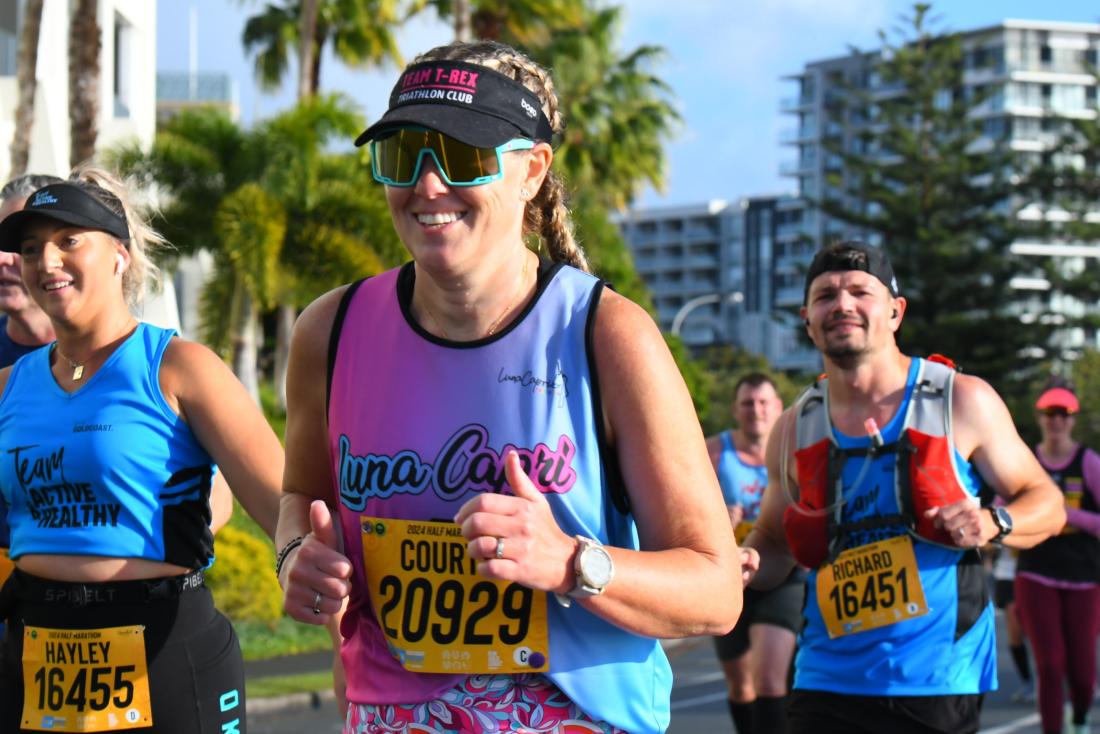
The half marathon has passed. The training this year went well, with no running related injuries to speak of at the point of writing, although I did get food poisoning a week before the race and I missed my last long run. I have learned a lot over the course of the year, which has helped get me to this point. The actual race was a totally different experience, it rained for the first few kilometres, I had stomach cramps and I suffered intense muscles spasms, none of which happened in over a thousand kilometres of my training over the course of the last two (2) years.

Race day 2024 was very different than I expected. I felt confident due to all my training. The rain was an annoyance, but one easily overcome by a running jacket (if I race again I’ll get a opaque poncho).

I woke up at 03:50am with little sleep and a blood glucose of 5.8 mmol/l. This crept up steadily, likely due to cortisol and adrenaline. By race start time I was 9.0 mmol/l with 0.9 units of insulin on board (IOB). Due to the IOB I ate about one third of a Cliff Bar (18g of carbohydrates) which in hind-sight was a mistake.
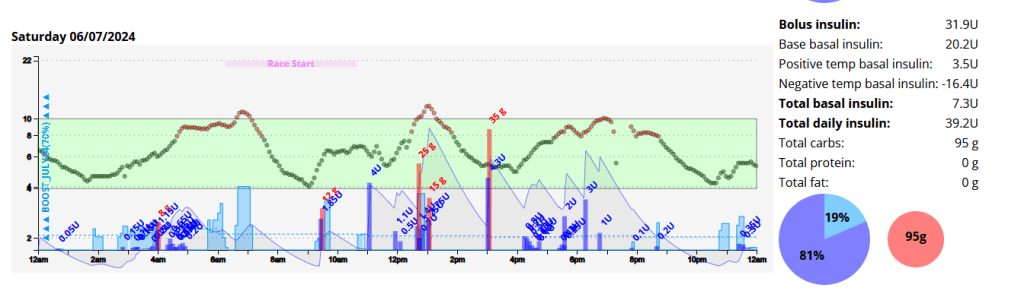
Nightscout graph for the entire day.

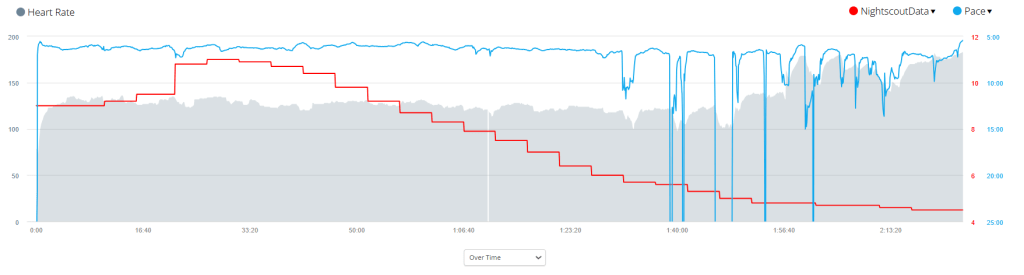
Due to the inclement weather my Garmin didn’t pick up my heart rate on my watch consistency, or perhaps even accurately. I found my Garmin advising I was running at approximately 130 BPM even though I felt I was pushing quite hard. I got a personal best (61 minutes) for the first 10 kilometres.

AAPS graph for race day.
LabelRace DayAverage during Training
Start Time06:23 am
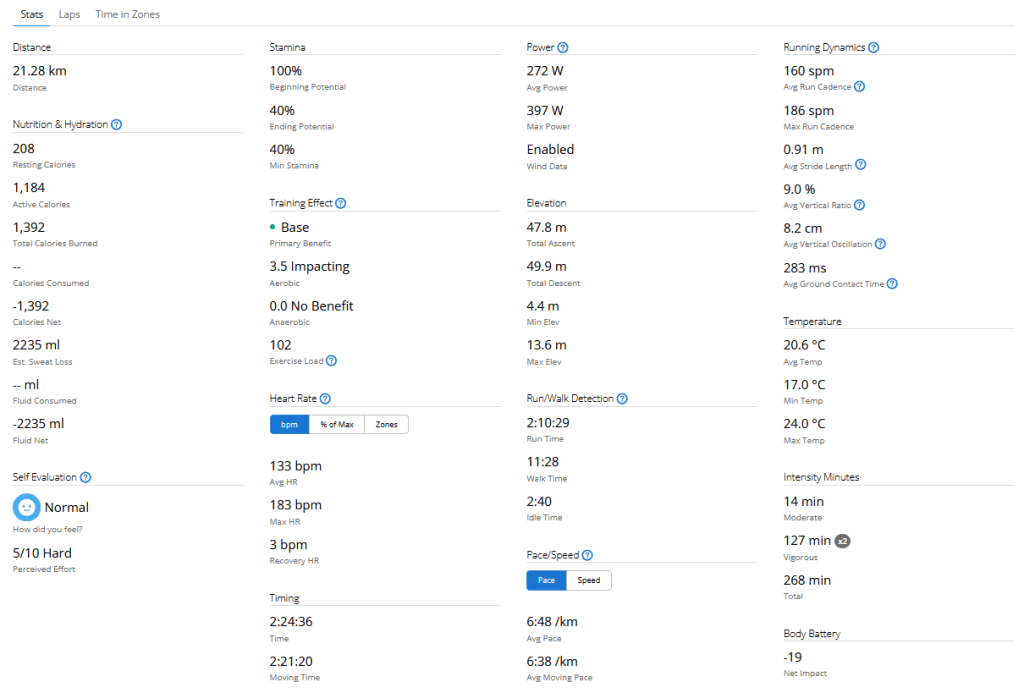
Distance21.2km
Average HR133 BPM
Standard Deviation2.3 mmol/l0.8
Coefficient of the variation31.9%11.3%
Blood Glucose – start9 mmol/l6.5
Blood Glucose – min4.4 mmol/l
Blood Glucose – max11.1 mmol
Blood Glucose – average7.4 mmol/l6.7
Time in Range (3.9-7.8)51%71.9%
Insulin on board0.990.1

Race day compared to training was wildly different, I will need to analyse the data and come up with a better race day strategy.
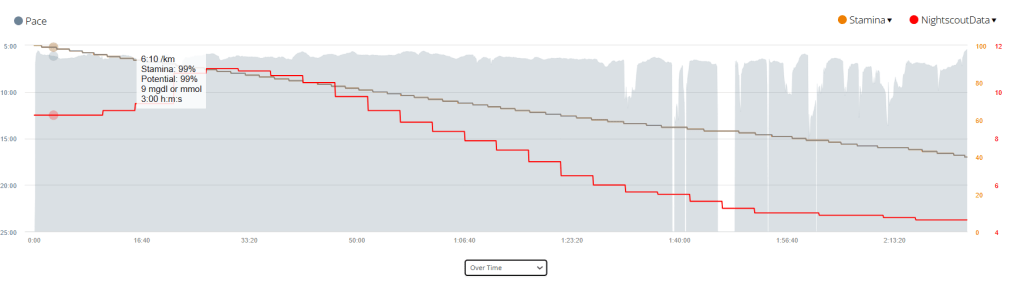
Time vs. Pace with a Stamina and Blood sugar overlay.
Time vs. Heart Rate with a Pace and Blood sugar overlay.
All Garmin Race Stats

I’ll add the link once all data is processed.

I try to come prepared for all possibilities.

This year I spend a lot of time finding the perfect shoe for my unique requirements, namely that I supinate on my right foot due to an atrophied right calf muscle. In my testing, the Brooks Ghost performed the best, allowing me to run any distance with no pain or discomfort.
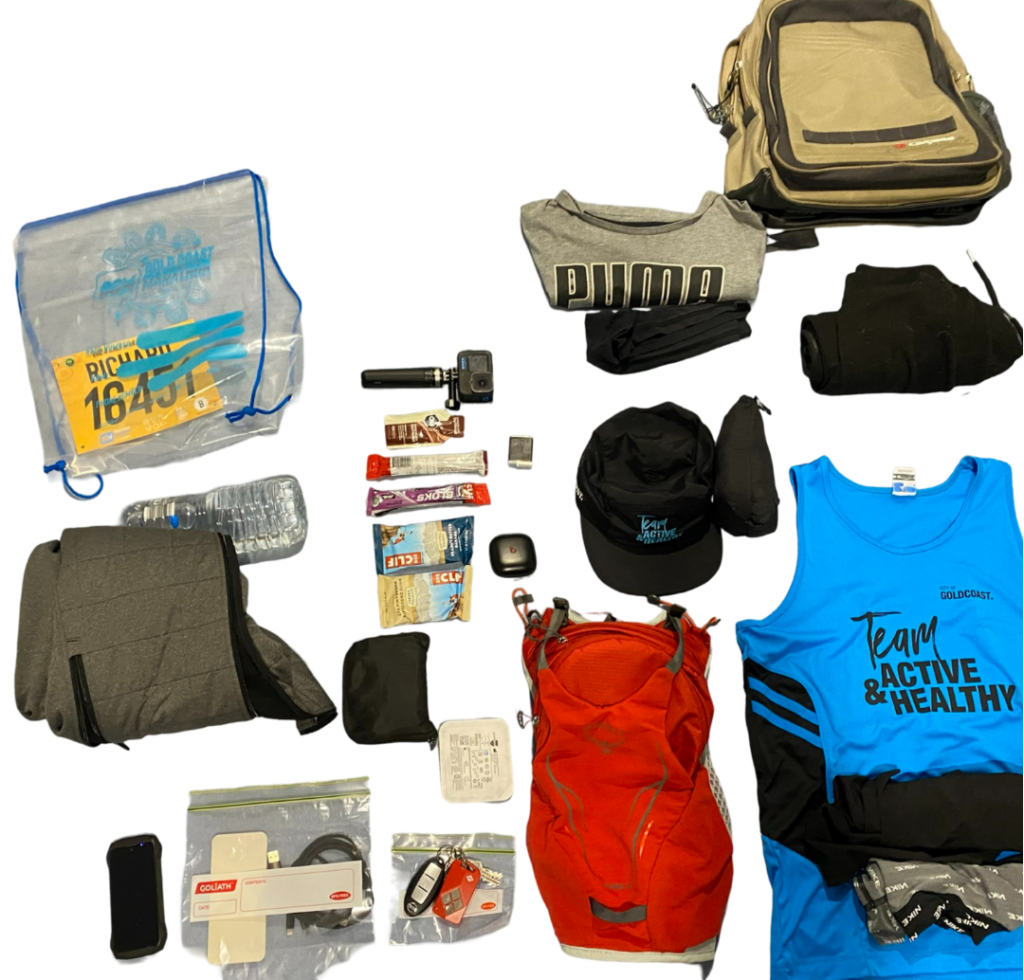
The food poisoning caused an electrolyte balance, which resulted in muscle cramps on race day. This was something I had not experienced during my training, an I was ill prepared for it.

My sugars were higher than during training again, and if I do this again I will refrain from coffee or any carbs prior to the event.

Fitness metrics, Garmin vs. Strava

Introduction: Fitness tracking has become an integral part of the modern fitness journey, helping individuals understand their progress, set goals, and optimize their training. Two popular platforms, Garmin and Strava, offer unique fitness metrics that provide insights into an individual’s performance and progress. In this blog post, we will delve into the science behind Garmin’s fitness metrics (VO2max, fitness age, training status, stamina) and compare them to Strava’s Fitness and Freshness metrics, shedding light on their differences and applications.

Garmin Fitness Metrics:

  1. VO2max: Garmin’s VO2max is a well-known fitness metric that measures the maximum amount of oxygen an individual can consume during intense exercise. It is considered one of the most accurate indicators of aerobic fitness. The calculation takes into account factors such as heart rate, speed, elevation, and personal characteristics. The higher the VO2max, the better the cardiovascular fitness level.
  2. Fitness Age: Garmin’s Fitness Age metric estimates an individual’s fitness level compared to the general population. It considers various parameters such as activity level, body composition, resting heart rate, and VO2max. By comparing these factors with an average person’s data, Garmin determines an individual’s fitness age. If your fitness age is lower than your actual age, it suggests a higher fitness level.
  3. Training Status: Garmin’s Training Status provides real-time feedback on the effectiveness of your training program. It considers your recent exercise history, performance indicators, and physiological data to determine whether you are undertraining, maintaining, or overreaching. This helps individuals optimize their training by finding the right balance between intensity, volume, and recovery.
  4. Stamina: Garmin’s Stamina metric helps gauge an individual’s energy levels during long-duration activities. It takes into account factors like heart rate, intensity, and duration to estimate the remaining time until exhaustion. Stamina provides valuable insights for endurance athletes, helping them understand their capabilities and manage their efforts during extended activities.

Strava Fitness Metrics:

  1. Fitness: Strava’s Fitness metric focuses on an individual’s overall fitness level and is derived from analyzing their training load and intensity. By taking into account factors like distance, duration, and heart rate, Strava calculates a Fitness score. The higher the score, the better the overall fitness level. It provides a general indication of an individual’s current state of fitness.
  2. Freshness: Strava’s Freshness metric complements the Fitness score by considering an individual’s recent training history. It evaluates the balance between training load and recovery, providing insights into the individual’s readiness for further intense training. A higher Freshness score suggests a well-recovered state, enabling athletes to plan their training schedule effectively.

Comparing Garmin and Strava Metrics:

While both Garmin and Strava offer valuable fitness metrics, there are some key differences between them. Garmin’s metrics, such as VO2max, fitness age, training status, and stamina, provide a more detailed analysis of an individual’s physiological parameters. They focus on factors like oxygen consumption, heart rate, and personalized data to provide a comprehensive view of fitness and performance.

On the other hand, Strava’s Fitness and Freshness metrics are more straightforward, providing a quick overview of an individual’s overall fitness level and recovery status. They are based on training load, intensity, and recent training history, offering insights into an individual’s readiness for further training.

The following table compares the key Garmin and Strava fitness metrics:

MetricGarminStrava
VO2 maxEstimates the maximum amount of oxygen your body can use during exercise.Not available.
Fitness ageEstimates your fitness level relative to your age.Estimates your overall fitness level based on your activity history.
Training statusIndicates whether you are in a training, overtraining, or undertraining state.Not available.
StaminaEstimates your ability to sustain long-term exercise.Not available.
FreshnessEstimates your recovery status based on your recent activity and sleep data.Estimates your recovery status based on your recent activity and sleep data.

Conclusion:

Garmin and Strava, both renowned fitness platforms, offer distinct fitness metrics that cater to different aspects of training and performance. Garmin’s metrics, such as VO2max, fitness age, training status, and stamina, provide a deeper understanding of an individual’s physiological parameters. Strava’s Fitness and Freshness metrics, on the other hand, focus on overall fitness level and recovery status. By utilizing these metrics, individuals can optimize their training programs, set realistic goals, and monitor their progress effectively, ultimately enhancing their fitness journey.

AAPS – Run Testing 2022

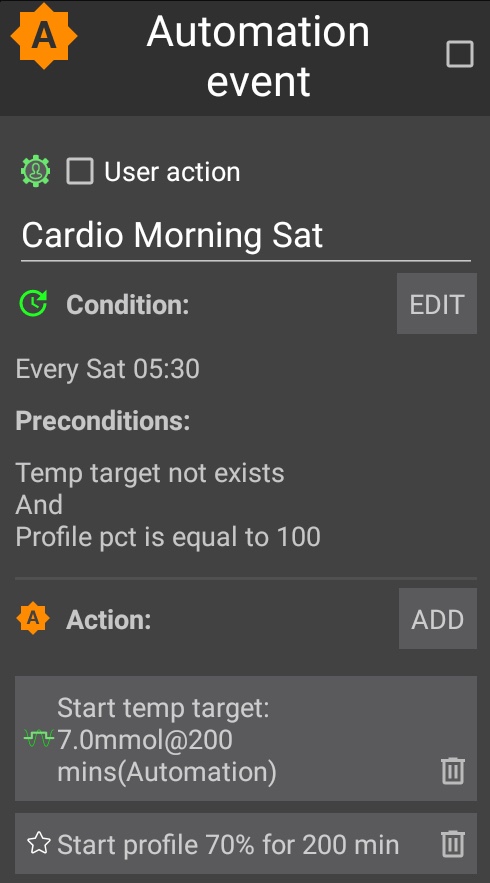
I decided to try using an automation to lower insulin levels and raise my glucose target before doing cardio. This allows AAPS to start this process at 05:30am on my days of choice so that my body is ready to exercise safely and with less need to consume carbohydrates. In my limited testing the process is working well, with some slight tweaking for testing parameters needed. NOTE: I only added half the amount of carbs I consumed to the APS for tracking. This is to avoid overcorrecting by the algorithm.

Expectations

I am trying to find the ideal conditions to exercise where I can experience moderate blood glucose fluctuations and not be required to consume large amounts of carbohydrates to keep me exercising safely. In the past on MDI I used to exercise fasted with only basal on board, which allowed me to stay in range for about 40 minutes before needing carbs. I am hoping to achieve this same amount using a pump. In past experiments I was able to achieve similar results during exercise by significantly reducing basal rates but I found that post exercise I struggled with higher than usual blood glucose readings for a few hours due to lack of insulin in my body.

Automations

Blood Glucose vs. CGM

The CGM results differed during exercise an average of 25% from blood readings. This made me decide to start some research of my own into using machine learning to try and estimate my blood glucose during exercise.

Results / observations

The automation route works well if you plan your exercise far enough ahead. The next experiment I will drop the profile percentage to 60% and observe. I noted an average of about 25% difference between the results the CGM and the finger pick tests. I was however able to keep my readings in range 100% of the time using 34g of carbs for the duration of the 50 minute experiment.

Capture from Nightscout

Video

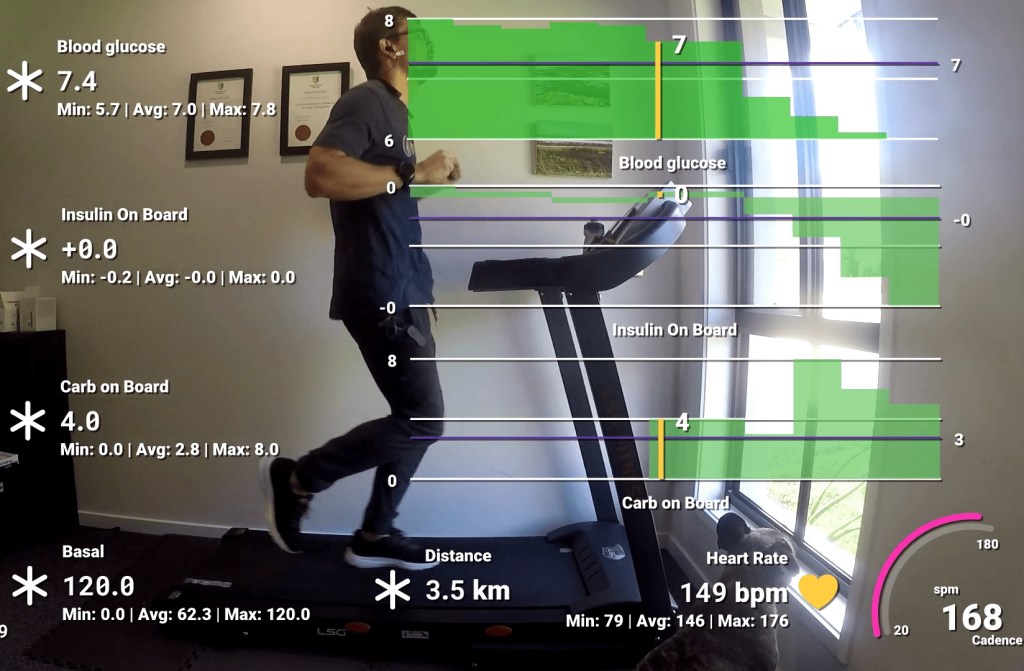
I created a video using data from my Garmin Forerunner 245 and AAPS to track the experiment. In this video I track blood glucose, insulin, carbs, basal, distance, heart rate and cadence. I noted that the algorithm the Garmin uses to determine distance does not work well while walking and didn’t register any distance until I started lightly jogging.

Capture from my GoPro during exercise